
Typical Components – Positioning Cylinders
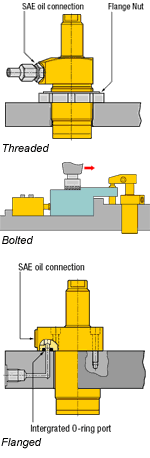 |
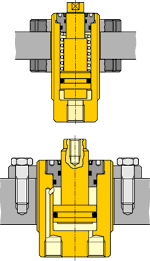
The first operation in workholding is to press the part against fixed points and surfaces, as detailed in the previous chapter, "The 3-2-1 Locating Principle." This task is performed by positioning cylinders. Stroke and capacity Stroke and capacity are the two performance parameters of concern. Many choices are available, so cylinder stroke length can be selected according to the distance the part must be pushed or pulled. The capacity of a cylinder is stated as the pushing or pulling force it produces when supplied with a given hydraulic oil pressure. Mounting styles Mounting style determines how a cylinder mounts to the fixture. There are three styles for mounting, threaded, bolted and flanged. Single- and Double-acting cylinders These cylinders are available in either single- or double-acting form. Single-acting cylinders deliver hydraulic power in only one direction of travel, utilizing an internal spring to provide plunger return when hydraulic pressure is removed. These cylinders are the simplest type and require the least plumbing (one port), but also deliver slower operating speeds than double-acting cylinders. Double-acting cylinders This cylinder uses hydraulic power to move the plunger in either direction, so they are more complex. The payback for slightly more plumbing and control devices is high speed operation in either direction and precise control of the plunger. |
 |
|
||||
 |
 |
 |
 |
 |
TM and © Enerpac 2002
All rights reserved. Reproduction of any materials without Enerpac’s permission is strictly prohibited.